
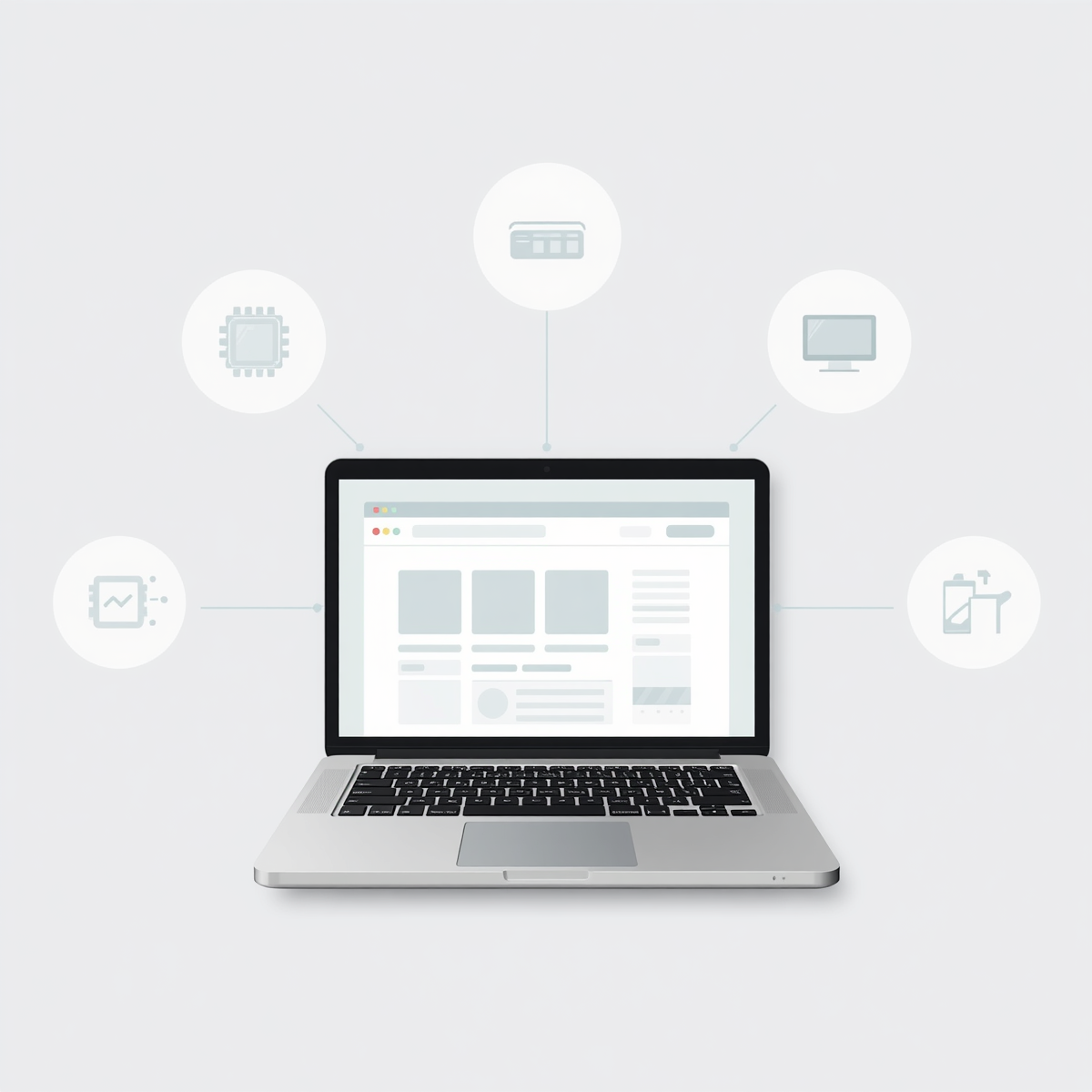
Choosing The Right Everyday Laptop
If you think buying a laptop should be straightforward, you’re wrong. It’s filled with a range of complicated terms like processor generations, RAM, various storage types, display technologies, battery ratings, and more. But the average consumer wants to know just one thing: What laptop meets my needs?
The right laptop doesn’t have to be the most expensive or the most powerful. Most people use laptops to browse the web and check emails, write and edit documents, watch videos, and attend online meetings. Upgrading to high-end hardware may not make a big difference for these tasks. On the other side of the spectrum, people who use laptops for more intensive work like editing videos, developing applications, playing games, or professional work that requires large and intensive programs need more advanced specs.
The right way to choose a laptop is to look at what you do first.
Look At What You Actually Do
Don’t look at specifications or some flashy sale on a laptop, look at what you use a laptop for.
If browsing the internet, sending emails, word processing, spreadsheets, online meetings, streaming and productivity apps are your main work activities for the day, then you are an everyday laptop user. You likely do not require a gaming laptop with a powerful processor and advanced graphics.
More advanced users who regularly edit photographs, work with large spreadsheets, create videos, use development environments, run virtual machines, and other professional applications need more advanced specifications.
This is important to consider because laptop specifications will only ever matter in relation to your workload. Something that is important to one user may be a waste to another.
How Much RAM Do You Need?
Random Access Memory (RAM) is essential when considering how many applications and tasks a laptop can handle at once. Enough RAM makes everyday use somewhat comfortable, while users needing or doing more memory-intensive tasks such as keeping many browser tabs or applications open, working with large files, media editing, or tasks that require a lot of memory need more RAM.
Increased RAM doesn’t always mean better performance when it comes to a user’s normal workload. If the workload/tasks a user has always stays far below the amount of RAM equipped to a laptop, then a huge RAM upgrade will not speed up a laptop.
Analyze your computer usage, and look for workload specifications rather than buying the laptop that has the best specifications.
Choose the Processor Based on Your Workload
Processor selection is important for laptop buying, but naming conventions used by processor manufacturers can get pretty crazy.
The processors available today are made by major manufacturers, and are of varying performance and generations. Just having the latest processor doesn’t mean it is the best, and having the processor with the highest model number also does not guarantee it is the best choice for your needs when comparing processors.
For laptops that are used to handle documents, browse the web, and do office work and tasks, you can usually make do with newer processors from reputable product lines that are not in the highest performance tier.
Newer laptops use SSDs to improve overall resource access speeds, so applications load faster, and user interaction with the system is more responsive.
While a more powerful CPU is great for resource intensive applications, a better way to gauge whether a processor is right for the user is knowing the software the user wishes to run.
Most of the time, when you buy a laptop, the amount of storage is important. Depending on your daily usage, the amount of storage may or may not matter. If most of your daily usage is consuming media and writing documents, then your storage needs may be rather low. But if you use the laptop for tasks such as data analysis, video editing, large photo archiving, or storing large games, then a low storage option would not suffice.
SSDs offer significant improvements over traditional hard drives. Even though they tend to have smaller total digital storage capacities, laptops with SSDs can start and open applications much faster than modern web browsers.
Use the space you need. Don’t rely on a cloud for everything.
External and cloud storage both mitigate the need for incredibly high storage counts in a laptop. That being said, don’t buy a laptop with horrible storage just because you plan on using the cloud for storage.
The purpose is to design your storage system according to your workflow. Some people who work with web applications have very different needs than people who process large videos.
Do You Require a Discrete Graphics Card?
Most everyday computing tasks do not require a discrete graphics card.
Using integrated graphics comes with web browsing, document processing, video playback, and video conferencing.
Dedicated graphics processors actually become relevant when you play taxing games, edit particular types of videos, work with 3D apps, perform specialized visual work, or software that benefits a great deal from GPU processing.
If none of those apply to you, then upgrading your graphics card will probably not enhance your day to day work.
Watch the Display
It is interesting how many people look at the specifications of the processor and RAM of a laptop, but sometimes completely disregard the display.
You need to think about the display size, resolution, brightness, viewing angles, refresh rate and type of display.
A bigger display can make tasks easier or can make the laptop relatively large, while a smaller display can make the laptop extremely portable. A high resolution display can make an image more detailed, but it may not be noticeable to you unless it is displayed at a distance.
If you work outside all the time or in bright environments, then panel brightness becomes really important.
For working in an office, a nice display can be a lot more important than highly performing hardware you rarely use.
Selecting Portability Tradeoffs
In choosing a laptop, portability cannot be measured by screen size alone. Weight, size of the charger, thickness, battery life, and even overall design can affect portability.
If most use cases will be at a fixed location and desk centered, a high screen size and portability will not matter as much.
However, a lighter laptop can make a big difference if use cases include school, work, meetings, coffee shops, or travel.
A laptop that has portable specs, but is uncomfortable to carry is ultimately not portable.
Really Consider Battery Life
Though laptop manufacturers include battery life estimates, other factors can affect real world battery life including how bright the screen is, how many applications are running, network conditions, power settings, and even what the laptop is processing at any given moment.
Someone editing a video may get very different battery life from someone browsing the web or using less demanding software.
Battery life estimates should not be relied on to determine the battery life experienced. They should be used as a general estimate and evaluated along with independent testing before purchase.
If you do your work away from power outlets, having a good battery should be a top priority when selecting a laptop.
The Specs Don’t Tell the Whole Story
You can’t fully tell how a laptop will feel to use just by looking at the specs.
If you do any work that requires you to type, a good keyboard will make a big difference.
The same can be said for the trackpad. If you do work where you don’t always have a mouse handy, a good trackpad will make a big difference.
When you can, test a laptop in person before purchasing. A laptop with strong specs may not be enjoyable to use if the track pad or keyboard is uncomfortable.
See the Ports
Many thin, modern laptops trade some connectivity for a more streamlined design.
Think about the ports you use a lot before purchasing a laptop. Do you need USB, USB-C, HDMI, audio jack, or something else to connect to your device? Consider the ports you use on a daily basis. If the laptop does not come with that port, you will need to use an adaptor or docking station.
A docking station or adaptor may not be the best purchase, but it is something you should consider before buying.
Consider Webcam and Microphone Quality
Laptops that support web calls are part of many jobs, educational institutions, and personal interactions.
Look into web cam and microphone quality if you need to do a lot of online meetings. Look beyond what people consider the “standard” laptops.
An improved webcam is especially important in low light situations. The microphone is also important for people who do not use a headset for calls.
While these specs may not seem as important as the processing unit for a computer, they are more important specs for someone who is on a lot of video calls.
Do You Need Windows, macOS, ChromeOS, or Something Different?
The operating system is important because it determines how you use your laptop and what you can install on your laptop.
Windows laptops provide more options for hardware and software compatibility. Macs have Apple’s software integrated, making them more appealing to people that predominately use Apple products. Chromebooks run on Chrome OS and rely more on the internet and cloud-based tasks.
The best OS is subjective.
Contemplate the apps you use, the devices you own, and the software you need.
If you need an app that only runs on a certain OS, you will have to buy that OS.
Think About the Future
Buying a laptop and expecting to keep it for a long time is valid, but consider if you are buying an upgradable laptop.
Some purchase windows or mandated obsolescence encourage customers to buy a new laptop when previously upgradeable components limited their use.
A laptop with flexible memory or storage may be beneficial in the future. For longer use, it may be better to get an upgradeable model.
Keep Money in Mind
For how important your laptop is to you, you have to think about how much you really need to spend.
Budgeting is prioritizing your needs and improving your overall satisfaction with your purchase over buying the most expensive laptop.
As an example, an individual that primarily uses a computer for web browsing and document writing would probably value a comfortable keyboard, large screen with a good display, and a laptop with plenty of RAM and an SSD over a premium processor.
Additional performance, portability, screen quality, battery life, and most other features do not warrant an increase in price unless they address an issue you have, in which case, it is worth the money.
Not Buying Based on One Specifications
A laptop is a self-contained system.
A laptop with a powerful processor and poor cooling will leave you frustrated. Large storage does not make up for a poor display. Fast screen response does not help if the battery life is poor.
Considrer the combination of processor, RAM, storage, display, battery, keyboard, ports, weight, operating system, and build quality.
In the end, the best laptop is the one that balances specifications.
Think About The Period of Time You Wish To Keep It
What you value in a laptop purchase depends on how long you plan to use it.
If you replace your laptop every year, then you should buy literally what you need. If you want to use the same laptop for many years, then you should buy what you need, plus slightly higher specifications, with larger storage.
Needs change with time, so purchase accordingly. Today’s fast laptop may feel slow after time as more demanding computers are built.
Just don’t purchase hardware just because it’s just above what you need for your everyday duties.
Progressively more laptops provide increasingly more performance. Commonly, buyers end up purchasing more performance than they actually need. A good example of this would be a browser and office applications user purchasing a high-end laptop with a dedicated graphics card, simply to max out performance.
Another mistake is not accounting for physical usability. A laptop may have the best performance, but is still a bad choice if the screen, keyboard, or weight of the computer is uncomfortable.
Buying a laptop that has limited storage is also a mistake, especially if you are constantly using a computer to open large files.
Finally, it is a mistake to purchase a laptop just because one specification sounds impressive. It is important to look at a laptop as a whole, consider if it fits your needs, and make a choice that can help you save money in the long run.
A Simple Example
Let’s consider a user that emails, browses the web, and uses spreadsheets and video meetings. This user also streams media and does some light photo editing.
Playing it safe, this user probably doesn’t need a high end gaming laptop with a dedicated graphics processor. This user would be better off with a modern mid-range processor with a good display, adequate RAM, an SSD, an improved webcam, better Wi-Fi, and slightly better battery life.
Now let’s consider a video editor working on if ace high-res projects. This user would reflect a need for much higher mid-range to high-end processors with high-end RAM, fast and big storage, graphics performance, and display quality as processing and graphics performance is important to achieve proper cooling for this editing workload.
As you can see, adequate performance for regular use changes how you evaluate the “right” laptop.
When Is It Worth Paying More?
If the performance upgrade actually solves a problem you have, it may be worth the extra money.
A big SSD can be useful if you need a lot of space, and RAM is useful for your workload. A better monitor can be useful if you spend a lot of time working on your laptop. A lightweight laptop, in some cases, is worth spending a little extra money on.
In some cases, people buy things because they ‘seem’ useful, but if they never use them, then they really aren’t worth the money.
The best upgrade is the one you use the most.
Choosing the right laptop depends on how you use your laptop. You won’t need a ‘bare-knuckle’ machine to do your work if you know how to understand your workload and what demands it makes on your laptop.
Most often, you don’t actually need to spend on the best laptop. A laptop that is well-balanced and has great hardware can be very useful and can improve your experience rather than an overspending laptop that only maximizes unnecessary numbers such as memory or storage.
You need to look beyond the specifications advertised in order to buy a good machine. You need a useful machine that is portable, has good battery performance with great connectivity and is comfortable to work on.
The right laptop won’t be the laptop that has the most numbers. It will be the laptop that accomplishes your needs for your budget.
Frequently Asked Questions
How much RAM does an everyday laptop require?
In this case, it really depends on the workload. The less demanding workload contains activities like browsing and doing office work. More intense workloads, such as gaming, editing, and software development, use more resources. Laptops should have RAM suitable for the user’s realistic daily tasks.
Is an SSD important for a laptop?
Yes. Older mechanical storage systems feel clunky by comparison to modern SSDs, where activities like opening the operating system, starting application, and accessing files are more responsive.
Is a dedicated graphics card needed?
Not for tasks like doing word processing, internet browsing, attending video calls, and similar. Dedicated graphics are useful when you start to do more intensive workloads, gaming, and certain professional tasks and editing.
Is a larger laptop better?
Smaller laptops have a better form factor, while larger laptops may have a bigger screen. The form factor, or size, may also include the its thickness.
Should I go for the best laptop that fits my budget?
Probably not. Unless you need to do more intense workload, you do not need to buy those. It gives little practical benefit to buy a laptop with more resources than you need, while you are also paying a premium for it.
How long should a laptop last?
There is no definitive answer to how long a laptop will last. There are a multitude of factors to consider including the design and quality of the housing, the hardware, the software, the workload, and even the health of the battery. Investing in higher performance hardware is a viable option if you plan on using the same laptop for an extended period of time.


One Comment