
Declutter Your Life: Practical Minimalist Living Tips for Beginners
Introduction
Ever look around your room and feel completely overwhelmed by just how much stuff you have? Between overflowing closets, a packed schedule, and a brain that won’t stop racing, modern life often feels like an exhausting juggling act. We hold onto things we haven’t used in years and overcommit our time, leaving us stressed and suffocated in our own homes. You are definitely not alone if you feel like your possessions end up owning you instead of the other way around.
Figuring out how to pare down isn’t just about having a trendy, empty-looking apartment; it is about reclaiming your time, your money, and your peace of mind. That is exactly why exploring minimalist living tips for beginners matters so much right now. When you cut out the excess, you create physical and mental space for the things that actually bring you joy. But before we start throwing everything into donation bins and drastically changing your daily habits, let’s break down what this lifestyle actually means and why you might be feeling so bogged down in the first place.
What is Minimalist Living?
Minimalist living is simply the practice of intentionally living with only the things you really need and truly love. It is about removing the distractions that take away from your quality of life.
Many people hear the word “minimalist” and immediately picture a completely white room with a single chair and no personality. That is a myth. Minimalism is highly personal. For you, it might mean having a capsule wardrobe so you don’t stress about getting dressed in the morning. For someone else, it might mean clearing off the kitchen counters so cooking feels relaxing instead of chaotic.
Think about your favorite coffee mug. You probably reach for it every single morning, even though there are ten other mugs pushed to the back of the cabinet. Minimalist living is simply the process of keeping that one favorite mug and letting go of the ten you never use. It is a daily habit of evaluating what adds value to your life and having the courage to let go of what doesn’t. You aren’t forcing yourself into deprivation; you are just turning up the volume on the things that matter by silencing the noise of the things that don’t.
Causes of Clutter: Why We Need Minimalism
Before looking at solutions, it helps to understand how our spaces get so out of control. It rarely happens overnight. Instead, it is the result of everyday habits and psychological traps that sneak up on us.
The Convenience Culture Trap
We live in an era where buying something takes a single click. Sales, fast fashion, and next-day delivery make it incredibly easy to bring new items into our homes without a second thought. For example, you might buy a cheap kitchen gadget because you saw it on a late-night ad, use it once, and then shove it in a drawer. When everything is cheap and convenient, we stop being intentional about what we buy.
Emotional Attachment to Objects
Often, we hold onto things not because they are useful, but because of what they represent. You might keep a guitar you never learned to play because you like the idea of being a musician, or hold onto a dress that hasn’t fit in five years because of the memories tied to it. This emotional attachment causes us to store items that only gather dust, making us feel guilty every time we look at them rather than happy.
The “Just in Case” Mentality
This is arguably the biggest cause of household clutter. We keep old cables, duplicate tools, and spare buttons out of fear that we might need them someday. While being prepared is good, storing a massive box of tangled electronics for a “someday” that never comes takes up valuable space. It creates visual noise and mental fatigue, making it harder to find the things you actually use on a daily basis.
Best Ways to Start Living Minimally
Taking the leap into minimalism doesn’t have to mean overhauling your entire life in one weekend. The most sustainable changes come from building small, manageable daily habits. Here are the best, actionable ways to start.
Adopt the “One In, One Out” Rule
If you buy a new pair of shoes, an old pair must be donated or thrown away. If you bring home a new book, an old one gets passed on to a friend.
Why it works: This creates a strict boundary on the volume of items in your home. It stops the mindless accumulation of stuff and forces you to think critically before buying something new.
Practical Example: Next time you buy a new winter coat, immediately go to your closet and pull out the worn-out jacket you haven’t touched in two winters. Put it straight into your donation bag.
Use the 90/90 Rule for Your Belongings
Look at an item and ask yourself: Have I used this in the last 90 days? If not, will I definitely use it in the next 90 days? If the answer to both is no, it’s time to let it go.
Why it works: It removes the emotional guesswork and gives you a concrete, logical timeline to base your decisions on.
Practical Example: Apply this to your bathroom cabinets. Those half-empty bottles of lotion or that specialty hair product you tried once three months ago? Toss them.
Digitize What You Can
Paper clutter is a massive source of stress for beginners. Mail, receipts, manuals, and old bills pile up on every flat surface.
Why it works: Physical documents take up space and are hard to organize. Digital files take up zero physical room and are easily searchable.
Practical Example: Download a scanner app on your phone. Scan your appliance manuals, tax documents, and important receipts, save them to a cloud drive, and shred the physical copies. Common mistake to avoid: Don’t just throw everything in a random folder on your computer; create a simple naming system (like “2023_Taxes”) so you can actually find things later.
Clear All Flat Surfaces Daily
Make it a daily habit to spend 10 minutes every evening clearing off your kitchen counters, dining table, and desk.
Why it works: Flat surfaces are clutter magnets. If there is one piece of mail on a table, it gives the rest of the family permission to drop their keys and junk there too. Keeping them clear instantly makes a room look 50% cleaner.
Practical Example: Before you go to bed, put the mail in the recycling, hang up your keys, and put the coffee cups in the dishwasher. You will wake up to a calmer home.
Implement a 48-Hour Buying Ban
When you see something you want to buy online or in a store (that isn’t an essential like groceries), force yourself to wait 48 hours before purchasing it.
Why it works: It completely breaks the cycle of impulse buying. The initial dopamine hit of wanting a new item usually fades after a day or two, and you will realize you don’t actually need it.
Practical Example: If you see a cute sweater online, leave it in your cart and close the tab. Two days later, evaluate if you still desperately want it or if you forgot about it completely.
Create a “Maybe” Box
Decluttering is emotionally taxing. When you find items you are terrified to let go of but know you don’t use, put them in a sealed cardboard box. Write a date on the box that is six months from today.
Why it works: It acts as a safety net. You aren’t throwing the item away yet, so the anxiety is gone. But if six months pass and you never opened the box, you prove to yourself that you don’t need those items.
Practical Example: Box up those decorative pillows you aren’t sure about. If you don’t miss them in six months, take the box straight to the thrift store without opening it.
Audit Your Subscriptions and Digital Life
Minimalism isn’t just physical. Digital clutter drains our energy just as much as a messy room.
Why it works: Unsubscribing from marketing emails stops the temptation to buy new things at the source, while canceling unused streaming services frees up your budget.
Practical Example: Spend 15 minutes today searching the word “unsubscribe” in your email inbox and remove yourself from store mailing lists. Then, check your bank statement and cancel that app subscription you haven’t opened since last year.
Expert Tips
If you want to take your decluttering to the next level, here are a few advanced strategies that experienced organizers use:
1. Don’t Organize What You Should Discard
A situation where people frequently fail is going out to buy expensive storage bins before they start decluttering. They end up perfectly organizing items they don’t even need. Always purge first. You’ll likely find you don’t need those new storage containers at all.
2. Start with the Visible, Not the Sentimental
Never start your minimalist journey by going through old photos or childhood keepsakes. You will get emotionally stuck in ten minutes. Start with the most visible, unemotional areas—like the bathroom counter or the junk drawer. Getting a quick visual win builds momentum.
3. Beware of “Aspirational” Clutter
We all own items for the person we wish we were. The expensive running shoes for the marathon we never trained for, or the foreign language books we never opened. Let go of the fantasy self and make space for your actual, current self.
4. Forgive the Sunk Cost Fallacy
People often hold onto a jacket they hate simply because they spent $150 on it. The money is already gone. Keeping the jacket in your closet doesn’t put the money back in your bank account; it just makes you feel guilty every time you see it. Let it go.
5. Treat Minimalism as a Tool, Not a Religion
Don’t stress if your home doesn’t look like a magazine cover. If you have a hobby like knitting or painting that requires supplies, keep them! Minimalism is about stripping away the useless stuff to make room for your passions, not stripping away your passions to meet a quota.
Common Mistakes to Avoid
-
Trying to do it all in one weekend: Attempting to declutter your entire house in 48 hours usually leads to burnout and a bigger mess than when you started.
-
The correct approach: Tackle one drawer, one shelf, or one room at a time.
-
-
Throwing away other people’s stuff: Throwing out your partner’s or kids’ belongings without permission creates resentment and fights.
-
The correct approach: Lead by example. Focus strictly on your own items and shared spaces first.
-
-
Creating extreme deprivation: Getting rid of your couch because you want to be “hardcore” will just make you miserable.
-
The correct approach: Keep what is comfortable and functional for your actual lifestyle.
-
-
Keeping things “just in case”: Holding onto three spare spatulas just in case you host a massive baking party is a trap.
-
The correct approach: Trust that if a highly specific, rare emergency occurs, you can borrow the item from a neighbor or buy a cheap replacement.
-
-
Thinking decluttering is a one-time event: People clean out their house and then go right back to their old shopping habits.
-
The correct approach: Treat minimalism as an ongoing daily habit and filter what comes into your home.
-
Pros and Cons of Minimalist Living
Pros:
-
Less time cleaning: Fewer items on the floor and surfaces mean vacuuming and dusting take a fraction of the time.
-
More money in your pocket: By stopping impulse purchases and being intentional, you naturally save a significant amount of money.
-
Reduced stress: A clear physical space directly correlates to a calmer mental state and lower cortisol levels.
-
Easier decision-making: A smaller wardrobe and fewer choices mean less decision fatigue in your daily habits.
Cons:
-
Initial emotional fatigue: Confronting your clutter and making decisions about sentimental items can be mentally draining at first.
-
Potential friction with family: If you live with non-minimalists, compromising on shared spaces can require patience and communication.
-
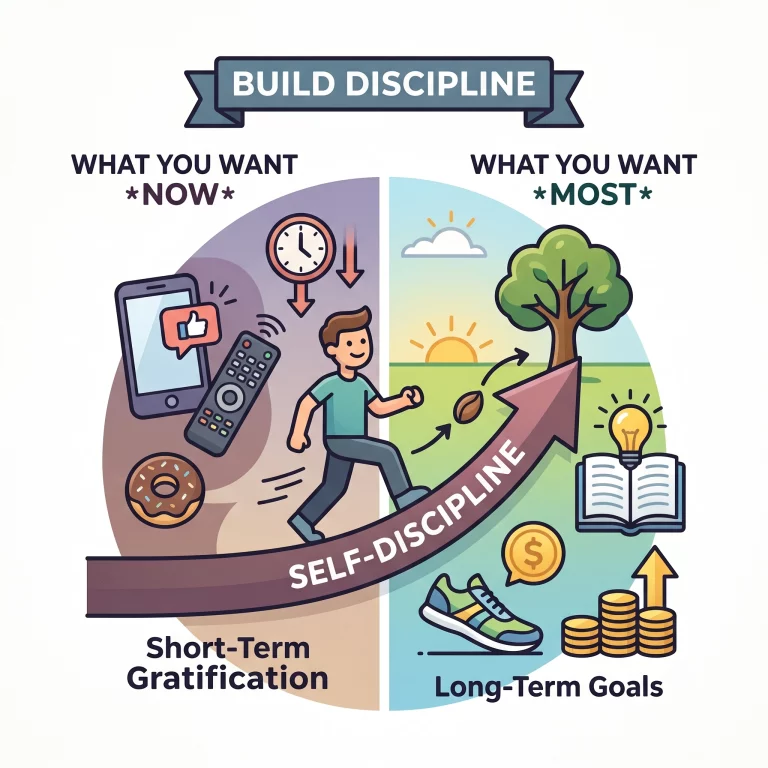
It takes time to build: Rewiring your brain to stop shopping for entertainment requires discipline and doesn’t happen overnight.
FAQ
Does minimalism mean my house has to look empty?
Not at all. Minimalism is about keeping things that serve a purpose or bring you joy. Your home can still have art, rugs, and books. The goal is intentionality, not emptiness. You are simply removing the excess clutter that gets in the way of living comfortably.
How do I handle gifts from family members?
Gifts are given to show love, and once received, the item belongs to you to do with as you please. If the item doesn’t fit your lifestyle, it’s okay to donate it. You can appreciate the thought and the person without feeling obligated to store the physical object forever.
Can I be a minimalist if I have children?
Yes! While kids naturally come with toys and gear, you can still apply minimalist principles. Focus on rotating a smaller number of high-quality, open-ended toys, teaching them to let go of broken items, and prioritizing experiences (like trips to the park) over buying new gadgets.
What is the 20/20 rule in decluttering?
The 20/20 rule states that if you are holding onto a “just in case” item, you should let it go if it can be replaced for less than $20 and in under 20 minutes from your home. It helps eliminate the fear of letting go of small, easily replaceable things.
How do I deal with expensive items I never use?
Accept the “sunk cost.” The money was spent when you bought the item, and keeping it in a closet won’t bring the money back. Sell it online to recoup some of the cost, or donate it so someone else can actually use it, freeing you from the guilt of seeing it every day.
Is minimalist living only for single people?
No, anyone can adopt these habits. While it requires communication when living with roommates or a partner, you can start by strictly managing your own possessions and shared flat surfaces. Often, leading by example encourages the rest of the household to join in.
How long does it take to declutter a house?
It depends on the size of your home and the amount of clutter, but realistically, it takes several months of steady work. Rushing the process leads to burnout. Aim for 15-30 minutes a day, and over a few months, you will see a massive transformation.
What should I do with the stuff I get rid of?
Sort items into three categories: sell, donate, and trash. High-value items can go on Facebook Marketplace or eBay. Usable clothing and housewares should go to local shelters or thrift stores. Anything broken or stained should be recycled or thrown away responsibly.
How do I convince my partner to try minimalism?
You don’t convince them with words; you show them with actions. Never force them to throw their things away. Focus entirely on your own belongings. When they see how quickly you get dressed, how tidy your spaces are, and how much less stressed you seem, they will naturally become curious.
What is a “just in case” box?
It is a temporary holding strategy for items you are afraid to throw away. Put the questionable items in a box, seal it, and write a date 6 months away. If you don’t need to open the box before that date, you donate the whole box, proving you don’t actually need those “just in case” items.
Conclusion
Starting your journey into minimalism isn’t about perfectly bare walls or throwing away everything you own. As we’ve explored, it is simply a shift in your daily habits toward intentionality. By adopting strategies like the “One In, One Out” rule, utilizing the 90/90 rule, and learning to let go of the “just in case” mentality, you can slowly peel back the layers of stress that physical clutter creates.
Remember that this is a marathon, not a sprint. You don’t have to overhaul your entire life by tomorrow morning. Start small today—clear off one single countertop, cancel one unused subscription, or put five pieces of unworn clothing into a donation bag. Every small step is a victory in taking back your space and your peace of mind. Take a deep breath, pick one drawer, and take that first step toward a lighter, more intentional life today.