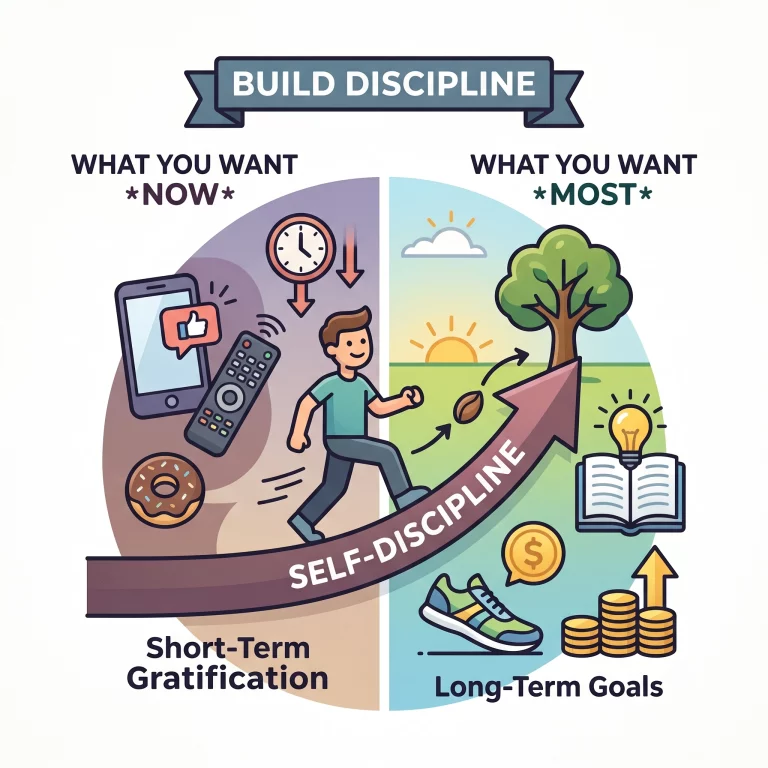
Daily Habits of Successful People: Simple Routines That Work
Introduction
Why do some people seem to stay organized and make steady progress while others spend the entire day busy without getting the most important things done?
It is easy to assume that successful people simply have more discipline, more motivation, or better circumstances. In reality, many productive people rely on ordinary routines that help them decide what deserves their attention and reduce the number of unnecessary decisions they have to make each day.
Think about a typical morning. You wake up, check your phone, answer a few messages, look at social media, respond to an email, and then realize that half an hour has disappeared. You eventually start working, but another interruption appears. By the evening, you have completed plenty of small tasks but the project that mattered most is still unfinished.
This is where learning about the daily habits of successful people can be useful. The goal is not to copy the exact schedule of a famous entrepreneur, athlete, writer, or executive. Their lifestyle may be completely different from yours.
Instead, it is better to understand the principles behind productive routines and adapt them to your own circumstances. A good routine should make important things easier to do consistently. It should not make your life feel like one long checklist.
The most useful habits are often surprisingly simple. They involve planning ahead, protecting attention, managing energy, reviewing progress, and knowing when enough work is enough.
Before choosing which habits to adopt, it helps to understand what these routines actually accomplish and why they work.
What Are the Daily Habits of Successful People?
Daily habits are repeated behaviors that become part of your normal routine. They can include planning the next day, exercising, reading, reviewing goals, starting important work before checking messages, or setting aside time for learning.
When people talk about the routines of successful individuals, they are usually referring to behaviors that help them manage their time, attention, energy, and responsibilities more effectively.
The important part is not how impressive the habit looks.
A person who spends two hours every morning following an elaborate productivity routine may appear highly disciplined. But if that routine leaves little time for meaningful work, it may not actually be productive.
A much simpler routine can sometimes be more useful. Imagine someone who spends ten minutes every evening checking tomorrow’s calendar, choosing three priorities, and preparing the materials needed for the morning. That small habit can remove a considerable amount of uncertainty from the next day.
Consider a freelance writer. Instead of waking up and deciding what to work on, they already know that the first two hours are reserved for writing. Email is handled afterward. Administrative tasks come later.
The routine does not make the work disappear. It simply reduces the number of decisions standing between the person and the work.
You can find additional practical ideas about productivity, organization, and everyday routines on this useful website.
That is the underlying idea behind effective habits: create a repeatable structure that supports the things you actually want to accomplish.
Why Productive Habits Matter
A productive routine is valuable because it reduces the amount of effort required to repeatedly make good decisions.
Without a routine, every day begins with questions. What should I work on first? Should I answer this message? Should I exercise now or later? When should I start the project? What did I forget yesterday?
These decisions may seem harmless, but they can make your day feel unnecessarily complicated.
A routine creates default behaviors. When something becomes familiar, you do not have to negotiate with yourself about it every time.
This is particularly useful when motivation is low. Motivation naturally changes from day to day. A routine provides some structure even when you do not feel particularly motivated.
The other major benefit is consistency. Big goals usually require repeated effort. Learning a skill, building a business, completing a degree, maintaining a website, writing regularly, or improving your professional abilities rarely happens because of one extremely productive day.
It happens because useful actions are repeated over weeks, months, and sometimes years.
Causes Behind Successful Daily Habits
People develop productive routines for different reasons, but several common factors explain why certain habits are easier to maintain than others.
Clear Priorities Reduce Confusion
One reason people struggle with productivity is that they have too many competing priorities.
Imagine opening your task list and seeing emails, a report, household chores, a presentation, several phone calls, research, and a project deadline. If everything appears equally important, choosing where to begin becomes difficult.
A clear priority system removes some of that confusion.
Successful people often identify what genuinely needs their attention instead of automatically reacting to whatever happens to appear first. This does not mean ignoring everything else. It means understanding which tasks have the greatest consequences if they remain unfinished.
For example, replying to a routine email may feel satisfying because it can be completed quickly. But if a major presentation is due tomorrow, spending your best concentration on the email may not be the best use of your time.
Consistency Builds Momentum
A useful habit becomes more powerful when it is repeated.
Consider someone learning a new language. Studying for five hours once a month may feel productive, but short, regular sessions can be easier to maintain and integrate into everyday life.
The same principle applies to many areas of work.
A writer who produces something regularly develops a different relationship with writing than someone who waits for inspiration. A student who reviews material consistently may have a different experience from someone who attempts to learn everything immediately before an exam.
Consistency does not guarantee success, but it creates repeated opportunities to make progress.
Routines Reduce Unnecessary Decisions
Decision-making consumes attention.
If you repeatedly have to decide when to exercise, when to study, when to answer messages, and what to work on first, your day can become filled with small negotiations.
A routine turns some of those choices into defaults.
For instance, if you always review your priorities after breakfast, you no longer have to decide when planning should happen. The existing routine becomes the reminder.
This is one reason simple routines can be easier to maintain than complicated productivity systems.
Environment Influences Behavior
Your surroundings can make certain behaviors easier or harder.
If your phone is beside you and constantly displaying notifications, checking it requires almost no effort. If your workspace is prepared for the task you need to complete, starting may feel easier.
This means productivity is not always about having stronger willpower.
Sometimes the smarter solution is to change the environment.
Someone trying to read more might keep a book beside their chair. Someone trying to reduce distractions might place their phone in another room during focused work.
Small environmental changes can remove friction from desirable behaviors and add friction to distracting ones.
Best Ways to Build Better Daily Habits
You do not need to adopt ten new habits tomorrow morning. In fact, trying to completely change your lifestyle overnight is usually unnecessary.
A better approach is to introduce habits gradually and make them practical enough to survive normal life.
1. Plan Tomorrow Before Today Ends
Spend a few minutes at the end of the day deciding what tomorrow needs to look like.
Check your appointments, deadlines, and commitments. Then identify the most important tasks.
The goal is not to create a perfect schedule down to the minute. It is simply to make tomorrow’s starting point clearer.
For example, instead of ending the day with “finish project” written on a task list, decide that your first work block tomorrow will be spent completing the introduction and reviewing the research notes.
When you sit down the next morning, you already know what to do.
2. Start With an Important Task
Many people begin their day by checking messages.
That can be a problem because email and notifications are largely reactive. They allow other people’s requests to determine where your attention goes.
Whenever your responsibilities allow it, consider giving an important personal priority your attention before entering communication mode.
If you need to write, study, analyze something, or work on a long-term project, use a focused period for that task before moving into routine communication.
You may discover that completing even 45 minutes of meaningful work early in the day changes how the rest of the day feels.
3. Use Time Blocks
Time blocking means deciding in advance when a particular activity will happen.
Instead of simply writing “work on project,” give that project a place on your calendar.
You might reserve 9:00 to 10:30 for focused work, 10:30 to 11:00 for messages, and 2:00 to 3:00 for administrative responsibilities.
This makes your workload more visible.
If you have six hours of available work time but have scheduled ten hours of tasks, you can see the problem before the day begins.
A common mistake is filling every minute. Leave some flexibility between commitments because meetings run late, tasks take longer than expected, and unexpected responsibilities happen.
4. Work in Focused Sessions
Large tasks can feel intimidating when viewed as one enormous project.
Instead of thinking, “I need to finish this entire report,” choose a smaller work session.
You might decide to work on the report for 30 or 45 minutes without checking unrelated notifications.
During that period, focus on one specific outcome. Perhaps you will write the introduction, analyze one section, or organize your research.
Short focused sessions can make starting easier because the commitment feels manageable.
The goal is not to force yourself to work continuously. The goal is to create periods in which your attention has a clear target.
5. Build Habits Around Existing Behaviors
One practical way to introduce a new habit is to attach it to something you already do.
Suppose you drink coffee every morning. You could use that existing routine as a cue to review your priorities.
If you always brush your teeth before bed, you could review tomorrow’s calendar immediately afterward.
This approach is useful because the existing behavior already happens regularly. You are not trying to create an entirely new routine from nothing.
The new behavior becomes part of a sequence you already understand.
6. Reduce Phone Distractions
Your phone can be useful, but constant access can make focused work difficult.
You do not necessarily need to stop using it. Instead, decide when it should have your attention.
During an important work session, you might silence nonessential notifications, place the phone out of reach, or use a separate device for communication.
For example, if you regularly spend ten minutes checking social media every time you become slightly bored with a difficult task, changing the phone’s physical location can make that behavior less automatic.
You are creating a small pause between the urge and the action.
7. Group Similar Tasks Together
Switching constantly between unrelated tasks can make a simple day feel chaotic.
Instead of checking email whenever a new message arrives, consider handling routine communication during specific periods.
The same principle can apply to phone calls, administrative work, content planning, errands, or household responsibilities.
Suppose you need to make five calls during the day. Doing them together may be easier than interrupting other activities five separate times.
Task batching gives your attention fewer directions to travel.
8. Review Your Week
Daily planning helps you manage individual days, but a weekly review allows you to identify patterns.
At the end of the week, look at what you completed, what you postponed, and what repeatedly caused problems.
If the same task has been postponed for three weeks, do not simply move it into another week’s list.
Ask why.
Maybe the task is too large. Maybe you need information before beginning. Perhaps it is not actually important enough to justify the time.
This type of review turns your routine into a system that can improve over time.
9. Create a Minimum Routine
A routine should work even when life becomes messy.
There will be days when you are tired, traveling, dealing with unexpected responsibilities, or simply not in the mood to follow your normal schedule.
Create a smaller version of your routine for those days.
If your normal planning session takes 15 minutes, your minimum version might be writing down tomorrow’s three most important tasks.
If your normal workout is 45 minutes, your minimum might be a short walk or basic movement.
The purpose is not to maintain a perfect streak. It is to prevent one difficult day from becoming a complete abandonment of the habit.
10. Schedule Time to Stop Working
Productivity should have a stopping point.
If you continue adding tasks whenever you finish one, work can easily expand into your entire evening.
A clear ending routine can help. Review what remains unfinished, decide what needs to happen tomorrow, and then close your work.
This creates a psychological boundary.
Not everything needs to be completed today.
Sometimes the most productive decision is recognizing that the remaining work belongs on tomorrow’s schedule.
Expert Tips for Making Habits Last
One of the most useful lessons from long-term productivity is that your routine should be designed around your actual energy.
You may have eight available hours, but your concentration will not necessarily be identical throughout all eight. If you notice that you write better in the morning, protect that period for writing rather than using it for routine administration.
Another useful technique is creating a clear restart point whenever you stop working on a large project.
Before closing your document, leave yourself a short note explaining what should happen next. Instead of returning tomorrow and wondering where you stopped, you can immediately continue.
This is particularly helpful with writing and research projects.
It is also worth creating a not-to-do list. Most people think about what they should add to their routine, but removing unnecessary behaviors can have an equally important effect.
For example, you might decide not to check email continuously, not to start the day with social media, and not to spend excessive time reorganizing your task-management system.
Finally, do not judge your routine by how impressive it looks.
A simple routine that you follow for six months is more valuable than an elaborate routine that lasts six days.
Common Mistakes to Avoid
- Trying to change everything at once: A huge lifestyle overhaul can become overwhelming. Start with one or two habits and allow them to become familiar.
- Copying another person’s routine: Someone else’s schedule may not match your responsibilities or energy patterns. Use their principles as inspiration rather than copying their exact timetable.
- Making the schedule too rigid: Unexpected events happen. Leave enough flexibility to move tasks without feeling that the entire day has failed.
- Confusing activity with progress: Organizing files or repeatedly checking email can feel productive without moving an important project forward. Ask whether the task actually contributes to your main goal.
- Depending entirely on motivation: Motivation changes. Build routines that make useful actions easier even when you are not particularly motivated.
- Making habits unnecessarily complicated: A productivity system with too many steps can become another source of work. Keep the process simple enough to maintain.
- Ignoring rest: Working continuously can make a routine difficult to sustain. Give yourself genuine downtime instead of treating every empty period as an opportunity to work.
Pros and Cons of Productive Daily Habits
Pros
- Better consistency: Repeated routines make important actions easier to maintain.
- Less decision fatigue: You spend less time deciding what to do next.
- Improved focus: Planned work periods can reduce unnecessary interruptions.
- Greater awareness: Regular reviews help you understand where your time is actually going.
- Clearer boundaries: A structured routine can make it easier to separate work from personal time.
Cons
- Requires effort initially: Building a routine takes attention before it becomes automatic.
- Can become restrictive: Overly rigid schedules may make unexpected changes frustrating.
- Some habits take time to establish: Results usually come from repetition rather than immediate change.
- Not every method works for everyone: You may need to experiment before finding the right approach.
- Poorly designed routines can create stress: A routine should simplify your day rather than fill every available minute.
Frequently Asked Questions
What are the most common daily habits of successful people?
Common habits include planning priorities, protecting focused work time, reviewing goals, maintaining consistent routines, learning regularly, managing distractions, and making time for recovery.
There is no single routine that every successful person follows. The useful part is the underlying behavior. They tend to create systems that help them consistently direct attention toward meaningful goals instead of relying entirely on motivation or reacting to every new request.
Do successful people follow the same morning routine every day?
Not necessarily.
Some people prefer highly structured mornings, while others have flexible schedules. A morning routine may also change depending on work, family responsibilities, travel, or other commitments.
The important thing is not whether you wake up at a particular time. What matters is whether the first part of your day helps you transition into the activities that matter.
What should I do first thing in the morning?
Start with whatever action has the greatest value for your current priorities.
For some people, that might be exercise. For others, it could be focused work, studying, planning, or preparing for the day.
If checking your phone regularly causes you to lose focus, delaying unnecessary notifications can be useful. Your first activity should support the kind of day you want to have rather than simply being whatever grabs your attention first.
How many habits should I start with?
One or two is usually a sensible starting point.
Adding too many new behaviors simultaneously makes it difficult to determine what is working and can make the routine feel burdensome.
For example, you could begin with planning tomorrow each evening and protecting one focused work session each day. Once those behaviors feel normal, you can consider adding another habit.
How can I build habits if my schedule changes every day?
Use flexible routines instead of rigid schedules.
Rather than saying, “I will study at 7:00 PM every day,” create a rule such as, “I will study during my first available 45-minute period.”
This preserves the behavior while allowing the timing to change.
You can also build habits around events that occur regardless of your schedule, such as waking up, eating breakfast, finishing work, or going to bed.
Are successful people’s habits more important than their skills?
Habits and skills serve different purposes.
A skill determines what you are capable of doing, while a habit influences how consistently you practice and apply that ability.
Someone can have excellent skills but struggle to make progress because their work is inconsistent. Likewise, strong routines cannot completely compensate for a lack of knowledge or ability.
Long-term progress usually involves both.
How can I stop abandoning my routine after a few days?
Make the routine smaller and easier to maintain.
People often abandon routines because they create unrealistic expectations. If your plan requires significant effort every day, one difficult day can cause the entire system to collapse.
Create a minimum version that takes only a few minutes. Once consistency becomes easier, gradually increase the routine.
Missing a day should be treated as a temporary interruption rather than a reason to quit.
Should I use an app to track my habits?
A habit-tracking app can be useful if seeing your progress motivates you and the process remains simple.
However, you do not need an app to build good habits. A paper calendar, notebook, or basic checklist can work just as well.
The tracking method should support the behavior rather than become the behavior itself. If you spend more time maintaining your tracker than actually completing your habits, simplify the system.
What is the difference between a routine and a habit?
A habit is a repeated behavior that gradually becomes more automatic. A routine is a sequence or structure of activities that you intentionally follow.
For example, brushing your teeth can become a habit, while your complete evening routine might include brushing your teeth, reviewing tomorrow’s calendar, preparing your clothes, and reading.
The two concepts overlap, but a routine can contain several individual habits.
Can daily habits really improve productivity?
They can make productivity more consistent by reducing unnecessary decisions and creating predictable opportunities to work on important responsibilities.
However, habits are not magic solutions. If you have an unrealistic workload, unclear goals, or insufficient resources, changing your routine alone may not solve the underlying problem.
The value of habits comes from making useful behaviors easier to repeat and helping you use your available time more deliberately.
Conclusion
The most useful lesson from studying successful routines is that productivity rarely depends on one extraordinary habit.
It usually comes from ordinary behaviors repeated consistently.
Planning ahead, protecting focused work, reducing distractions, reviewing your progress, managing your energy, and creating time to rest can make your days easier to navigate. None of these habits needs to be complicated.
You also do not need to copy someone else’s lifestyle. Your responsibilities, schedule, energy, and goals are different. The best routine is one that fits your actual life and can continue working when the day does not go perfectly.
Start with one small change. Perhaps spend five minutes planning tomorrow before bed, protect one distraction-free work session, or choose your most important task before opening your inbox.
Give that habit time to become familiar.
Then build from there.
The goal is not to create a perfect schedule. It is to create a repeatable way of living and working that helps you spend more of your attention on the things that genuinely matter.